Sunday, October 24, 2010

Naught For One, but Something for Two - Nano Strategy - Walker Universe

Well, my plans were for naught on Walker Novel 1. But I did get more ideas for the series and Walker Novel 2 (Nano'10 Novel). I am trying a different method based off a book I was reading, the Weekend Novelist by Robert J. Ray. What I am doing is as follows:

  • Key scenes intro.  I have Beginning and End, Plot Point One and Plot Point Three, Midpoint or Plot Point Two, and finally, I have Climax plus one more.  Literary agent Donald Maass spoke of bridging conflict in his Writing the Breakout Novel.  IIRC, his idea of bridging conflict is the series of conflicts that lead up to the first main conflict or event of the novel.  So, in the name of balance, I decided the introductory conflict is not Plot Point One, but falls in between the Beginning and that, like the Climax is between Plot Point Three and the Ending.  This key scene I call the Launch, for it is where things start getting more serious.   Therefore I have seven key scenes.   Now, what do I do with them?
  • Key scene use.  I write these key scenes first, generally by pairs.  Why?  Because I am trying to keep my ADHD brain engaged.  Writing out of order helps.  But I also dislike rewriting, so my plan is once I write these key scenes, to go back and edit them into shape.  From around these seven pillars, I can start the process of filling in the rest of the novel.  I'll speak more on that in another post.  
So that is it thus far on my technique of laying out foundation or pillar scenes.  I'll leave with books of interest (through Amazon Affiliates) that might be of interest.  I have not read the last book below, but it looks like one to put on my to-get list:

Tuesday, October 12, 2010

Journal of Self-EducationTechniques

I have begun reading a one-of-a-kind book that came too late to help me on my first elit campaigner book.  But I will read and adapt its methods as I go, in preparation for second and third choices in the campaign.  Especially, I seek to adjust it for someone with ADHD on the brain.  What book of coolness am I talking about?

This one:
 
It is about starting your own classical education, but it gave me an idea to become more engaged with this blog.  How?  By adopting and adapting the journal of self-education Ms. Bauer speaks of:

[The journal of self-education] is the place where the reader takes external information and records it (through the use of quotes, as in the commonplace book); appropriates it through a summary, written in the reader's own words; and then evaluates it through reflection and personal thought. ~ Page 36.

Most of my journal will be offline and personal, but this blog will hold clips I want to share.  The likely format will be as follows:

  1. Quote or focus
  2. Summary
  3. Rumination

It is worth a shot anyway, and will likely lead to better implementation of the study material--which is half of what I'm shooting for in the first place.  Action, not just studying.

We'll see how it goes.  Expect the first post tomorrow.

===========

Prolonged Campaign on Art of War

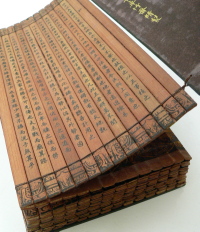
Photo by vlasta2, found on Wikipedia,


The halfway point of Sun Tzu's Art of War is not just in sight, it has been passed.  I am on nook page 72 out 135.  Thank goodness.  But that reminds me of something.  So, so long ago, I wrote about a key point in the manual.  It was relevant then; it is relevant now. 

"When you engage in actual fighting, if victory is long in coming, then men's weapons will grow dull and their ardor will be dampened." ~   From Page 36, Part II, Number 2

The reading and studying of AoW has threatened to become the much dreaded prolonged campaign.  But Sun Tzu also pointed out:

"Thus, though we have heard of stupid haste in war, cleverness has never been seen associated with long delays." ~ Same page, Same part, Number 5.

Though the last part is a downer due to my procrastination, the first part is a pick-me-upper.  Haste does not make great.  The way I read it is:  if a war is not won in a day, why should I expect to the study thereof to be accomplished any faster?  You see, there is much of Sun Tzu's advice to digest.  I'll get dyspepsia of the mind if I try to consume too fast.

That reminds me of a fresher source of advice.  A Science Daily article covered a study on complex decisions and thinking with the following result:

"the volunteers who were told to consciously think about the decision for a specific amount of time performed poorly in both experiments [conducted in the study]."  (emphasis mine)

And that: 

"although unconscious thought may help us make the right decision in some instances, it is often better to rely on self-paced conscious thought and really focus on the problem at hand."
Basically, the study showed that putting a time frame on the decision resulted in poorer decision-making results than letting your unconscious decide or letting yourself decide at your own pace.  This involved complex decisions, however.  But it made me wonder:  can it be applied elsewhere in our lives?  Namely, are we wrong to set a specific time-limit on our goals?  So, I began to think, what's the harm in testing my theory out by choosing to read and study at my own pace?--as long as their is an actual pace involved.  Non-existent or when I get to it doesn't quite count, I'm afraid.  Let's see, shall we?

Wednesday, October 6, 2010

Nanowrimo 2010

This year's nanowrimo novel is second novel in the Walker series.  The first of the series was last year's nano winner.  It's been quite a while since I wrote fiction, so in preparation for this year's marathon, I am starting a personal marathon.  I will rewrite Novel #1. 

Stay tuned for more information on this series, my rewriting technique, and how it goes.

Tuesday, September 14, 2010

Art of War Ebook - Regrouping

Photo by vlasta2, found on Wikipedia,


I am behind on my Campgain for E-Literacy first book choice, Sun Tzu's Art of War.  Why?  Because I fell prey to what exactly Sun Tzu warned about:

...if victory is long in coming, then men's weapons will grow dull and their ardor will be damped.
and

. . . though we have heard of stupid haste in war, cleverness has never been seen associated with long delays.

Basically, I didn't time my campaign well.  But with Sun Tzu's advice, I can reshape this campaign for success.  Starting with refocusing.  I'll craft a motive statement, asking myself, "What do I want from this campaign?"  And, "Whom do I want to reach?"

With that information, I can build a new schedule.  A new plan.  New goals.

Then, I do it.

So, Campaign for E-Literacy is about to get a second wind once I do some regrouping.


=|||===|||===|||=

Like this article?  Read more articles or posts based off Sun Tzu's advice on my other pages:
  1. Happiness Spotter
  2. Examiner
  3. Gather
  4. Hub
(links added as they come available)

Thursday, August 26, 2010

A is For . . .

Introduction:  On Happiness Spotter, my self-help blog, I wrote about challenging your fears to get what you want in life.  My first program to do just that is this blog, Campaign for E-Literacy.  What is Campaign for E-Literacy?  In a nutshell it is:  Studying twenty-six non-fiction ebooks from Project Gutenberg.  I will select the books by using a title from each letter of the alphabet.  I also must read all ebooks on my nook e-reader.  I am doing this all in the name of increasing my knowledge and competency in life.  And I am starting today.

Book choice:  What is first up in the Campaign for E-Literacy?  The letter A.  In this case A is for . . . Art of War by Sun Tzu.

Book reasoning:  It is a classic that survived millennia, and by that reason alone is worth listening too.

Conclusion:  That's it.  Consider joining me in reading the Art of War or starting your own literacy program.  I would love to know your thoughts on all this.

Introduction to Campaign for E-Literacy

Introduction:  On Happiness Spotter, my self-help blog, I wrote about challenging your fears to get what you want in life.  My first program to do just that is this blog, Campaign for E-Literacy.  What is Campaign for E-Literacy?  In a nutshell it is:  Studying twenty-six non-fiction ebooks from Project Gutenberg.  I will select the books by using a title from each letter of the alphabet.  I also must read all ebooks on my nook e-reader.  I am doing this all in the name of increasing my knowledge and competency in life.  And I am starting today.

My reasoning:  I will enjoy this challenge immensely--reading, learning.  I love both.  If one could make a living by reading, I would be a millionaire already. 

If that were not enough, here is a quote by John Kieran, an American journalist.  He once said, "I am a part of all that I have read."  I believe that.  So, if I read about knowledgeable, competent people writing about their area of competence, then I become competent, bit by bit, piece by piece, book by book.

A win-win.

Format of the program:  I will post updates on my progress, interesting outside material I have read or learned about the subject/author/work, related books I want to read eventually, and the knowledge acquired thus far.  These will mostly be weekly and at milestones as I read through the book--i.e., the beginning of it, the quarter mark, the half-way point, the three-quarters mark, and the ending.  All of this will be posted on this blog.

Conclusion:  That's it.  Consider joining me in reading my A book or starting your own literacy program.  I would love to know your thoughts on all this.